
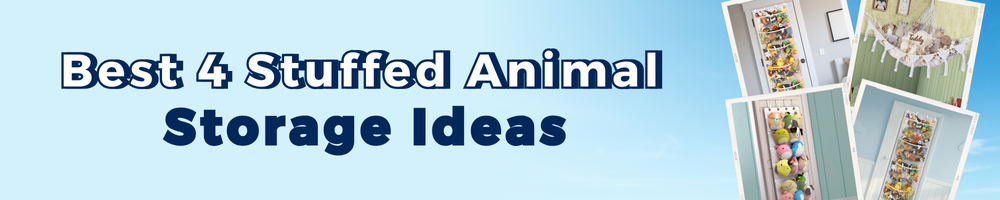
Stuffed Animal Storage Ideas: The 9 Best, Ranked by Problem
Last updated: September 2026
The short answer: for most rooms, over the door mesh pockets: 50+ stuffies for $30.95, about $0.62 each, no floor space and no holes. Past 70 stuffies, a wall or corner net stores them cheaper, about $0.35 each. For a corner that has to look good, a macrame hammock. Bins and bean bag chairs are the two ideas that photograph beautifully and fail in real rooms.

We make stuffed animal storage, and have since 2021, so read knowing the bias. Each idea below is headed by the room problem it solves, with the numbers galleries leave out.
The best stuffed animal storage ideas, ranked by the problem they solve
1. No floor left in the room
Over the door pockets. Floor is the scarcest resource in a kids bedroom, and the back of the door is surface nothing else wants. Deep mesh keeps every stuffie visible, so every toy has an address.
Holds 50+. Costs $30.95. About $0.62 per stuffie.

Honeyera The Original Stuffed Animal Storage (Patented)
Four deep breathable mesh pockets, holds 50+ stuffies, support rods included so nothing sags, installs in under a minute with no tools, 10 colors.
$30.95 at Honeyera2. The collection passed 70 stuffies
A wall or corner net, the cheapest idea per toy by a wide margin. It uses dead space above head height, and open mesh keeps plush from going stale. Hardware is included, but it needs a drill.
Holds 70+. Costs $24.90. About $0.35 per stuffie.
3. Renting, and no holes allowed
Door pockets, or a hammock on hooks already in the wall. A standard US interior door is 1 3/8 in thick and 30 or 32 by 80 in: about 17 square feet of unused storage surface in every bedroom.
Holds 50+. Costs $30.95. About $0.62 per stuffie, zero holes.
4. A bare corner that has to look intentional
A macrame hammock. The one idea that sells on looks, and earns it: 100% cotton cord across a corner at 42 x 42 x 56 in. Five point support stops the sag that kills every bedsheet version.
Holds up to 50. Costs $32.95. About $0.65 per stuffie.

5. A 3 year old has to run it alone
Low pockets at chest height, or an open cage or zoo style tower with a front opening. The rule is no lid: if putting a toy away needs two hands, a toddler skips it. More in our zoo storage guide.
Holds a few dozen. Cage towers typically run $30 to $60.
6. Shared bedroom, two kids, one wall
Split by door, not by shelf. Two kids with one wall still have two doors, and a door each ends the ownership argument. A high net takes the overflow.
Holds 100+ across two doors. Costs $61.90. About $0.62 per stuffie.
7. Giant plush that fit nowhere
Honest answer: nothing stores jumbos cheaply. A corner net slung high takes a few, a deep pocket takes one each, and the rest become furniture. Measure your biggest plush first.
Holds a handful of jumbos. Net costs $24.90. Measure before you buy.
8. Dust and allergy concerns
Open mesh, plus a wash routine. The Asthma and Allergy Foundation of America recommends keeping stuffed toys off the bed and washing them in hot water to kill dust mites. Breathability decides plush storage more than capacity does; method in our washing guide.
Costs nothing. Saves the collection.
9. Too many toys, not a storage problem
Rotate instead of buying more storage. In a 2018 University of Toledo study published in Infant Behavior and Development, toddlers given 4 toys played longer with each one, and in more varied ways, than with 16. Store the rest and swap monthly.
Keep 4 to 10 out. Costs $0.
Pick the idea by the problem, not by the product
| Room problem | Best idea | Holds | Cost | Why it wins |
|---|---|---|---|---|
| No floor left | Over the door pockets Our pick | 50+ | $30.95 | $0.62 each, no floor used |
| Past 70 stuffies | Wall or corner net | 70+ | $24.90 | Cheapest at $0.35 each |
| Corner has to look good | Macrame hammock | Up to 50 | $32.95 | Decor that stores 50 plush |
| Toddler runs it alone | Low pockets or open cage | A few dozen | $30 to $60 | No lid to lift |
This page ranks ideas by room problem. For the storage types lined up side by side, read Best Stuffed Animal Storage: Every Type Compared.
The two ideas we would skip
Bean bag storage chairs. Access is the failure: to get one toy out a child unzips the chair and unstuffs it. Nobody bothers twice. The safety record is worse. In 2014 the CPSC announced a recall of about 2.2 million Ace Bayou bean bag chairs after two children suffocated on the foam beads inside. The voluntary standard asks for permanently disabled zippers; a plush fill chair needs one a child can open.

FAQ
What is the best stuffed animal storage idea?
Over the door mesh pockets. The collection goes vertical, a child can reach it, nothing gets drilled, and 50+ stuffies for $30.95 is about $0.62 per toy.
What is the cheapest way to store a lot of stuffed animals?
A wall or corner net, about $0.35 per stuffie at 70+ capacity. Cheaper still: keep fewer out, rotation costs nothing.
Are stuffed animal storage bean bags safe for kids?
We do not recommend them. About 2.2 million bean bag chairs were recalled in 2014 after two children suffocated inside, and the voluntary standard asks for permanently disabled zippers. A toy version only works with a zipper a child can open.
What storage works if you rent and cannot drill holes?
Over the door organizers leave no marks, and a hammock on existing hooks leaves none either. A standard interior door is 30 or 32 by 80 in, so an organizer fits nearly any bedroom with no tools.
Start with your worst problem, not the prettiest photo. If the floor is gone, the Original patented over the door storage clears it in a minute. If the room is tiny, our small space storage guide goes deeper.
